
This is the first in a two-part series devoted to this topic.
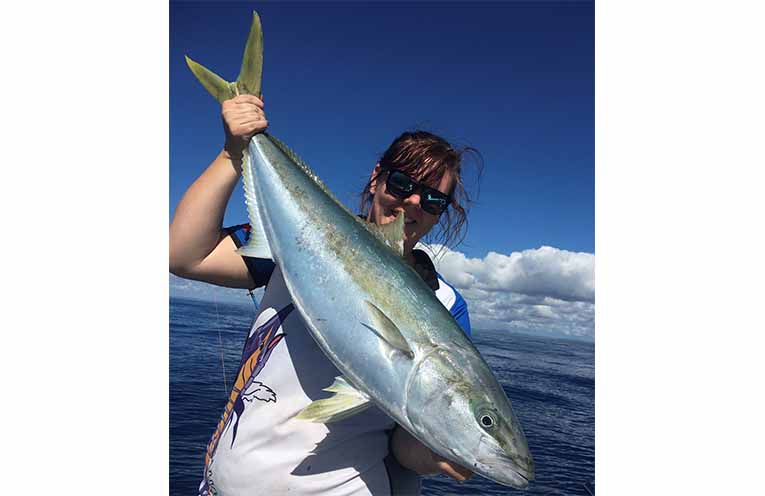
TWO of the Mid North Coast’s most popular offshore fish, snapper and yellowtail kingfish, are the focus of proposed new management plans.
Recreational anglers have been invited to have their say.
The NSW Department of Primary Industries and Regional Development (DPIRD) has released draft harvest strategies for both species. The aim is to rebuild fish stocks while still allowing people to enjoy fishing for them into the future.
As someone involved in representing recreational fishers, I want to make it clear that I am approaching these proposals with an open mind.
Rather than telling anglers what they should think, my hope is that they will take the time to read the proposals, understand what is being suggested, and make their own submissions.
That doesn’t mean we shouldn’t ask some hard questions along the way.
THE proposed East Coast Snapper Harvest Strategy is based on the latest information available about the health of the snapper stock. The assessment estimates that the NSW snapper population was around 23 per cent of its original, unfished level in 2022.
The proposed plan aims to first rebuild the stock to 30 per cent and eventually to 50 per cent of its unfished level.
The draft strategy proposes a total fishing limit of 300 tonnes a year.
For recreational fishers, the proposed starting rules include a bag and possession limit of three snapper per person. There would also be an allowance for one snapper over 70cm per person. The proposal also includes a split of the total catch, with 45 per cent allocated to recreational fishing and 55 per cent to commercial fishing.
These numbers are likely to attract plenty of discussion among anglers. There are also questions around how recreational catches are estimated, how catch shares are worked out, and how things such as weather, breeding success and fish moving between different areas can affect stock numbers.
The draft strategy acknowledges that improving the information available on recreational catches and better understanding snapper breeding and environmental conditions will be important in the future.
FROM my perspective, the yellowtail kingfish harvest strategy is more concerning.
The latest assessment estimates that the number of spawning-size female kingfish in the NSW component of the eastern Australian stock was around 5.5 per cent of its unfished level at the beginning of 2025.
It is important to understand that this 5.5 per cent figure is not an estimate that only 5.5 per cent of all kingfish remain. The latest assessment has changed the way the stock is measured, focusing specifically on spawning-size females, rather than simply looking at the total biomass of kingfish.
This is also why the figure is quite different from the previous assessment, which estimated the stock at around 26 per cent in 2023. The two figures cannot be directly compared because the assessments are measuring the stock differently.
The draft strategy proposes a total fishing limit of 120 tonnes a year, with the goal of rebuilding the stock to 30 per cent of its unfished level within 12 years, and eventually towards 50 per cent.
The proposed recreational rules are much tighter than those for snapper. They include a one-fish bag and possession limit, as well as a one-fish limit for boats and charter boats.
For recreational anglers, that one-fish-per-boat proposal is a significant change. If several mates have travelled offshore together, sharing the cost of fuel, bait and tackle, being able to bring home just one kingfish between the entire boat could change whether targeting kingfish is worthwhile.
The strategy also suggests that a seasonal catch-and-release period could be considered around the main spawning period, which is expected to be between November and January. For kingfish, the proposed catch is split evenly, with 50 per cent allocated to recreational fishing and 50 per cent to commercial fishing.
There are also some areas where scientists say more information is needed. This includes understanding where large kingfish travel, how different fish populations mix between different areas, and where young kingfish are coming from.
There is also a bigger picture to consider. Kingfish found along our coast are part of the same broader population as those found around New Zealand. Genetic studies and tagging have shown that fish move between the two countries.
When you look at the number and average size of larger kingfish being caught in New Zealand, it raises an interesting question about what our own fishery could potentially look like if the stock was rebuilt to a higher level of larger, spawning fish.
That doesn’t mean our local kingfish fishery is in poor shape. Anyone who spends time offshore on the Mid North Coast knows there are still plenty of quality fish being caught.
But what we see locally is only one part of a much larger picture.
For Part 2 of Kate’s analysis of proposed management strategies, see next week’s edition of Port Macquarie News Of The Area.
By Kate SHELTON