
Share via:
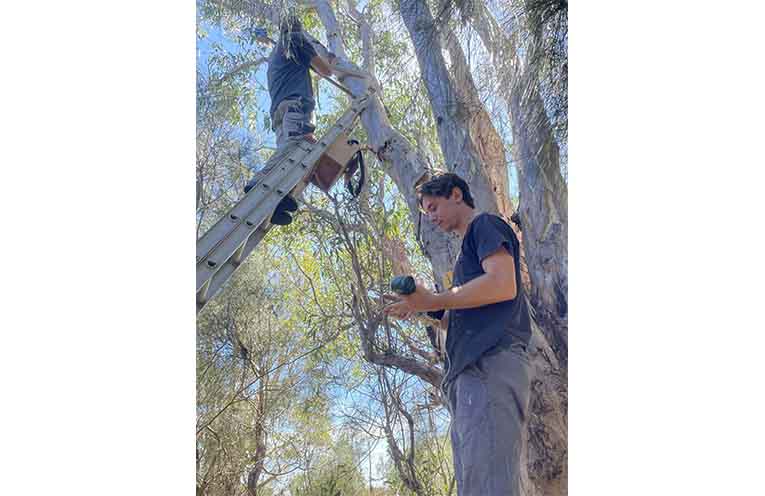
NETTE and Andy McCoubrie are passionate environmentalists and conservationists who are dedicated to regenerating and preserving the bush on their 25-acre property in Dunbogan.
A wide array of native species can be found on their land, but they soon realised there was a lack of hollows which form homes for wildlife like gliders, parrots, owls, possums and bats who rely on these for shelter and for breeding.
It can take suitable hollows more than 100 years to form, leading to a critical shortage of these animal homes.
Recognising the importance of information and data around hollows and their use, the McCoubries developed and launched the Dunbogan Hollow Trial which aimed to see if creating artificial hollows by drilling into living trees could help bridge the gap.
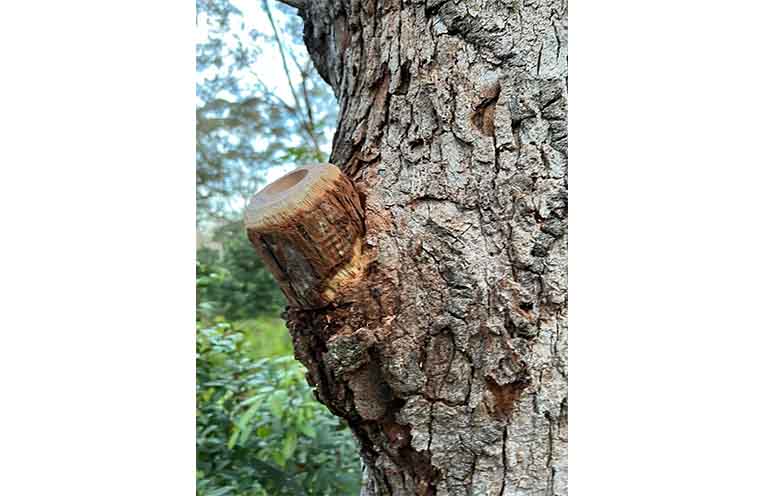
The project soon grew into a collaboration involving ecologist Dr Ross Goldingay, the Biodiversity Conservation Trust (BCT), and Matt Stephens, inventor of the Hollowhog – a tool used to carve hollows within living trees through a relatively small entrance opening.
Forty hollows were installed on the property with the potential for them to keep evolving as the trees grow.
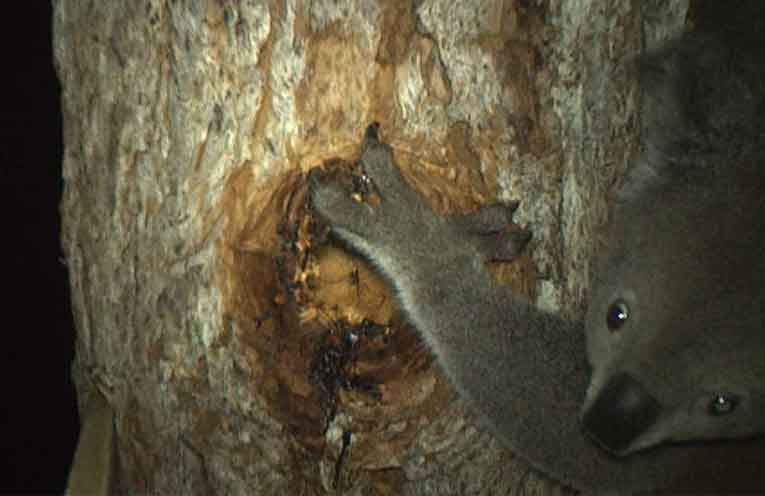
The hollows are monitored by motion-activated wildlife cameras in what is believed to be the first project of its kind.
“We aim to monitor these hollows for ten years,” Nette told NOTA.
“It is simply groundbreaking to have this sort of project and I believe citizen science initiatives such as this are the future.”
Twelve local volunteers assisted with reviewing footage and identifying species, as well as helping process the enormous volume of data generated by the cameras.
The thousands of images and videos captured offer insight into how each species interacts with the structures.
“Every hollow effectively becomes a study site,” Andy said.
“The cameras allow us to see which species are using the hollows, what designs they prefer and how we can improve future installations.”
Researchers and project partners are investigating questions around hollow dimensions, entrance sizes, occupancy rates, species preferences and long-term hollow development.
Their findings may ultimately help guide habitat restoration efforts far beyond the Camden Haven region and improve future hollow designs.
The cameras used for monitoring were loaned to The Hollow Project, with the McCoubries now investigating funding options to purchase the necessary monitoring equipment.
“The cameras are absolutely critical,” Andy said.
“The hollows themselves are only part of the story.
“The real value comes from understanding what happens after they’re installed.
“Without monitoring, we’re relying on assumptions.
“With cameras, we’re generating evidence that can improve future hollow design, support scientific research and help deliver better outcomes for wildlife.”
To support the initiative, follow The Hollow Project Australia on social media.
By Rachael THORPE
You can help your local paper.
Make a small once-off, or (if you can) a regular donation.
We are an independent family owned business and our newspapers are free to collect and our news stories are free online.
Help support us into the future.
Share via: