
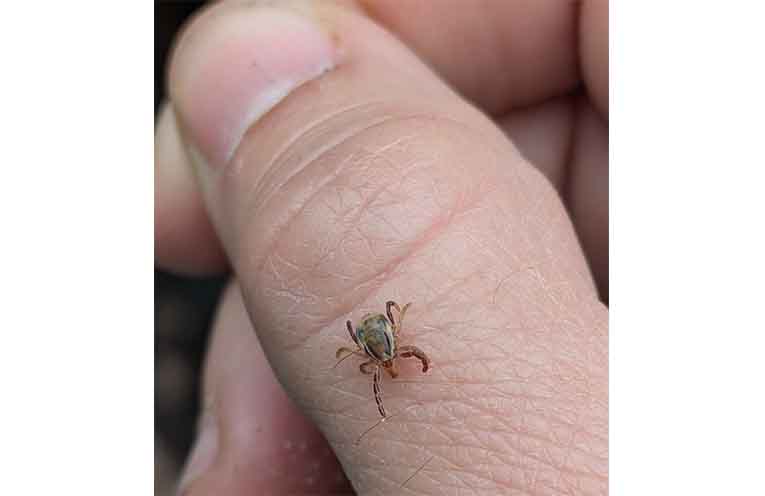
TICK nests, or tick bombs to some, are a common phenomenon in the Australian bush.
However, few people have heard of them, let alone know what to do when encountering one.
News Of The Area spoke with Bellingen local Rosie Lewis, who recently had a severe reaction to a tick nest.
She ended up in hospital with a red rash covering her neck and torso.
Initially thinking the rash was a side effect of medication, Rosie was told she had been bitten by a large number of tiny ticks.
“So much of nature we cherish and adore and then you get something like a tick nest,” she said.
“Until I Googled it, I had no idea.”
The Australian Paralysis Tick (Ixodes holocyclus) is the most commonly encountered on Australia’s east coast, accounting for around 95 percent of bites.
The species has three life stages, the larval stage, nymphs, and adults.
The “tick nest” refers to the larvae.
Females lay up to several thousand eggs in a tight cluster in leaf litter.
Flinders University tick expert Dr Gerrut Norval told NOTA the eggs hatch between two weeks to two months after being laid.
“The larvae will not disperse far, and for species like the paralysis tick, the larvae will ‘quest’ during humid conditions,” he said.
“[That is], they will ascend vegetation about half a metre above the ground and then wait for a potential host to brush against them.”
Larvae are typically active in autumn, though it is difficult to predict exactly when they will be most abundant because of variability in hatching rates and environmental conditions.
People usually become aware of them when they suddenly find themselves covered in tiny moving dots (around half to one millimetre in length), or when they develop symptoms like fever, itching or a rash.
Tick larvae are colloquially referred to as seed or grass seed ticks, but some people also refer to the nymph stage as grass ticks.
As with any tick, prevention is best.
If possible, avoid tick-infested areas, bush and long grass, especially after rain.
Wear tucked-in sleeves and pants, covering the neck and head, and use light-coloured clothes (which helps in spotting and brushing off ticks).
Some people combine these strategies with insect sprays or treating clothing with permethrin but medical advice should be sought as these aren’t recommended for everyone.
On returning home from a day in the bush, people and clothes should be washed and checked thoroughly.
Checking the body again in the morning is also a good idea.
Medical professionals commonly suggest the use of freezing sprays to kill adult ticks, while creams are popular for all tick life stages.
Attempting to remove a live tick with tweezers is not recommended and if needed, assistance can be sought from your local GP.
Anyone with a severe reaction should seek urgent medical assistance.
By Jessica MILLER