
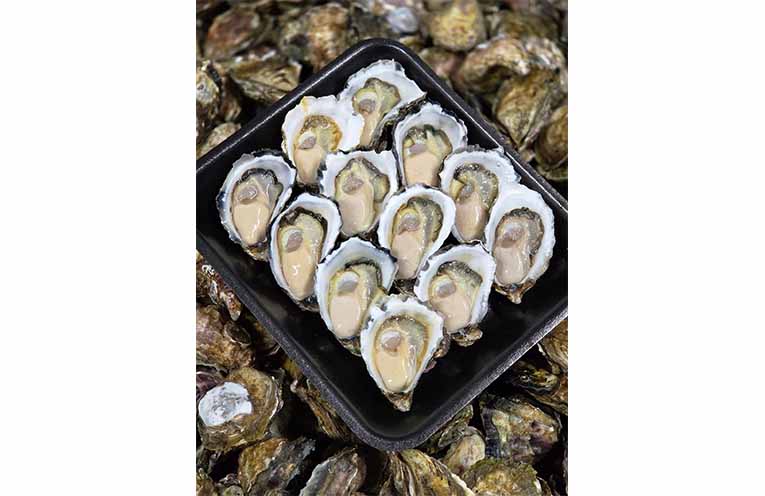
OYSTER farming has been carried out commercially in the Camden Haven River for more than 50 years, with the Sydney Rock Oysters grown there favoured for their taste and texture.
The rich history of the area includes generations of families that have farmed oysters and are extremely proud of their legacies and reputations.
Local oyster farmers say that the Department of Primary Industries (DPI) has proposed introducing Triploid Pacific Oysters to the area to diversify oyster production.
Pacific Oysters grow at a much faster rate.
A spokesperson for the DPI told News Of The Area that the NSW Department of Primary Industries and Regional Development (DPIRD) had received three applications to add Triploid Pacific Oysters to three North Coast oyster-farming estuaries which had background populations of wild Pacific Oysters.
Farming of Triploid Pacific Oysters alongside Sydney Rock Oysters is an increasingly common risk management strategy adopted across the NSW oyster industry to manage seasonal conditions in Sydney Rock Oysters and support a more rapid recovery for oyster farmers from disease or natural disaster events.
Triploid Pacific Oysters are functionally sterile, meaning they cannot reproduce and spread.
DPIRD met with oyster farmers and Aboriginal community members at the Nambucca River and in Camden Haven in April 2026 where the applicants discussed their proposal.
“DPIRD is currently assessing feedback on the applications, with consideration to environmental, economic, social and cultural concerns,” the DPI spokesperson said.
Local resident Wendy Crozier doesn’t agree with the proposal.
“I am a very concerned long-time resident whose late partner and his family were oyster farmers in the Sydney Rock Oyster industry in Sydney and were involved in the introduction of oyster farming after WWII in our river,” Ms Crozier said.
“They started farming here to ensure the longevity and sustainability of the Sydney Rock Oyster because the water was, and still is, pristine compared to the Sydney rivers.”
Her concerns were echoed by Brett Harper, who has farmed on the river since 1994 and is adamant he won’t have anything to do with growing Pacific Oysters, saying “I’m a Sydney Rock fanatic”.
“We all want a 100 per cent guarantee that this plan won’t impact what we currently have, and they just can’t guarantee that,” Mr Harper said.
“I have been in enough meetings to know that most farmers are against it, so I don’t understand why the DPI is pushing so hard on it.”
According to the DPI the NSW oyster industry was worth $58 million in 2021-2022, with 90 per cent of that from Sydney Rock Oysters.
Triploid Pacific Oysters are ready for harvest in 12-18 months with virtually year-round availability, as opposed to the three-year growth cycle and shorter season of Sydney Rock Oysters.
While Sydney Rock Oysters are native, Triploid Pacific Oysters are an introduced species and critics point to Australia’s long legacy of detrimental environmental impact via this practice.
By Rachael THORPE