
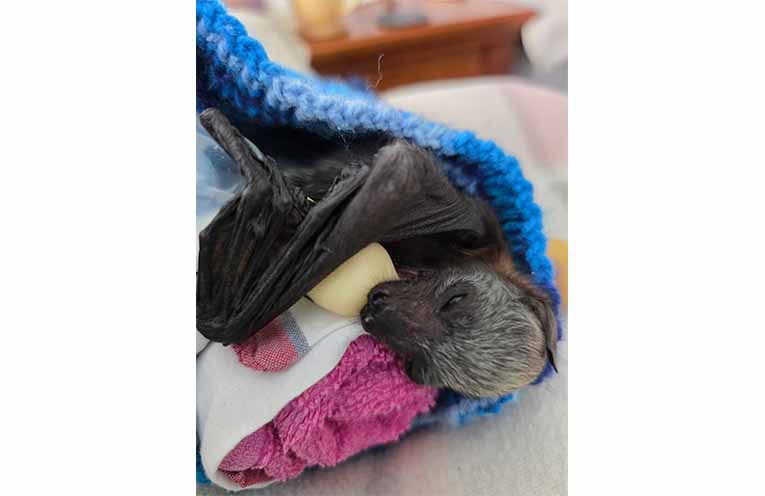
OCTOBER is global Bat Appreciation Month – a time to appreciate the 1300-1500 species that inhabit the Earth and represent one-fifth of all mammal species on Earth.
In the Camden Haven, as in much of Australia, grey-headed flying foxes are essential to the ecosystem.

Over millennia they symbiotically evolved alongside Eastern Australia’s rainforests, becoming such essential pollinators that some tree species only blossom at night.
Nationally, the Grey-headed Flying Fox once numbered in the millions, but current estimates indicate that fewer than 400,000 remain.
That number could continue to dwindle due to changes in weather and climate, such as an unusually warm winter, which disturbs the cycle of flowering plants.
“FAWNA and other wildlife rescue organisations are being smashed at the moment with unprecedented numbers of malnourished, starving Grey-headed Flying Foxes, particularly newborns who are being found still clinging to dead mothers,” FAWNA spokesperson Kym Kilpatrick told News Of The Area
“Many people are reporting seeing them in places they aren’t normally seen, including backyard callistemons.
“It’s believed the cause is the unusually warm winter, which has thrown the flowering eucalypts they rely on at this time of year out of sync.”
Bats are the only mammals capable of true, sustained flight, with the Australasian Bat Society recording 81 distinct species across our continent and offshore islands.
These are broadly separated into two distinct ecological groups: insectivorous microbats and megabats, including fruit bats and flying foxes.
Grey-headed Flying Foxes can fly up to 50 kilometres a night, migrating from food source to food source. In addition to their role as pollinators, this makes them the key dispersers of seeds that keep forest ecosystems strong.
Among the seeds they disperse are the food trees essential to the survival of koalas.
No other species can match their volume and range of pollination and seed dispersal.
If you have concerns about sick or injured wildlife, FAWNA can be contacted 24/7 on 02 6581-4141.
By Rachael THORPE