THE North East Forest Alliance (NEFA) has questioned the NSW Government’s Koala baseline assessments, saying that a review has found the Government’s models of koala densities broad and inaccurate.
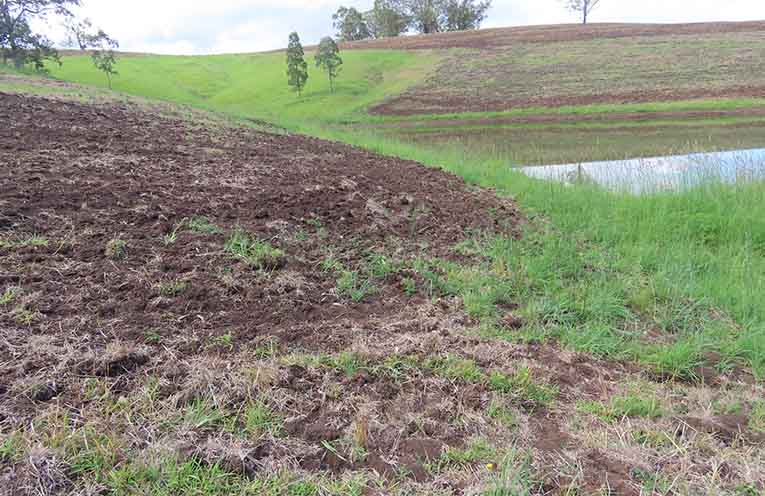
This includes claims that cleared paddocks near Kyogle have higher densities of koalas than the Great Koala National Park (GKNP).
NEFA says the survey results, often quoted by opponents of the GKNP, have led to greatly inflated koala population estimates for NSW.
The NSW Government recently released the outcomes of the assessments.
They are intended to identify koalas’ distribution and abundance across NSW, and provide a baseline against which future population changes can be measured.
The outcome included models of koalas’ distribution and densities, and a total NSW koala population estimate of around 274,000, which is much more than most other estimates.
The NEFA review’s author Dailan Pugh OAM, described the aims of the baseline survey, which are to obtain accurate maps of koala habitat and populations across NSW, as important and worthy.
“Unfortunately, the outputs of the $20 million project are too inaccurate to achieve its aims or provide a baseline,”
The modelled koala densities have not adequately accounted for cleared land, identifying very high koala numbers in farmers’ paddocks, resulting in misleading mapping and grossly inflated population estimates.”
Mr Pugh said the drone surveys used to identify actual koala densities at 384 sites across the whole of NSW are a very small sample.
“They primarily relied on recordings of male koalas calling at least once in the breeding season, over two weeks at 1,179 sites, to model koala distributions and densities,” he said.
“This appears to have falsely inflated densities because it does not account for the fact that some males may be transients dispersing through poor quality or unsuitable habitat, therefore calls are not necessarily representative of good habitat or resident populations.
“They extrapolated their survey results across NSW using coarse mapping of aridity, distance to rivers, canopy height, koala feed tree density and soil nitrogen, without accounting for numerous other habitat attributes known to affect koala densities.
“At the very least they should have excluded cleared paddocks from their model.”
Mr Pugh said that, based on the model, the largest area of the highest density koala habitat in NSW is to the north-east of Kyogle, with cleared paddocks shown to have higher densities of koalas than found in the best habitat in the Great Koala National Park.
A spokesperson for Department of Climate Change, Energy, the Environment and Water (DCCEEW) said the survey used a range of monitoring techniques including heat-detecting drones and acoustic recorders.
She said the NSW survey numbers broadly align with CSIRO’s most recent koala estimates, and that koalas remain an endangered species threatened by habitat loss, disease, vehicle strikes, and climate change.
By Andrew VIVIAN